Raptor Scout: remote seabed excavation validated at Dounreay
A live 220kV cable route gave the Raptor Scout its first full test as an excavation platform rather than an inspection vehicle. Here is what it proved.
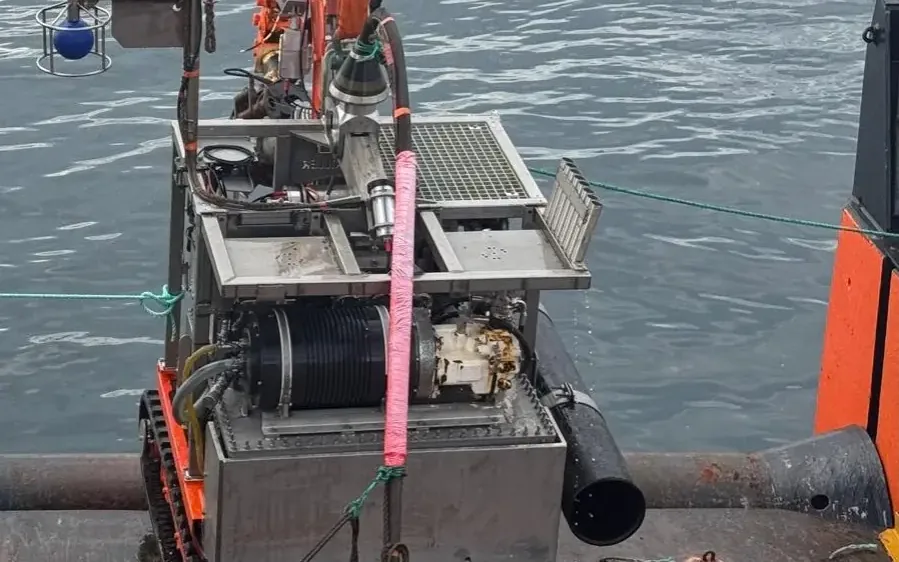
Every tool in the Raptor range reaches a point where the workshop can tell you nothing more. The question stops being whether a system performs to specification and becomes whether it performs on a real seabed, on someone else’s programme, with weather and tide and a client waiting. For the Raptor Scout, that point came at Dounreay.
The setting was the Orkney to Caithness 220kV HVAC subsea link. Working for OCU Group, Leask Marine put the Scout to work clearing sediment at a horizontal directional drilling punch-out, readying the seabed so offshore duct could be installed. It is unglamorous work. It is also precisely the kind of task that tells you what a machine is actually good for.
From observation to intervention
The Scout was conceived as a tracked platform that could carry tooling, not simply cameras. That distinction matters. A vehicle built to look at the seabed and a vehicle built to change it face different problems: reaction forces, stability under load, station keeping while a tool is doing work that pushes back.
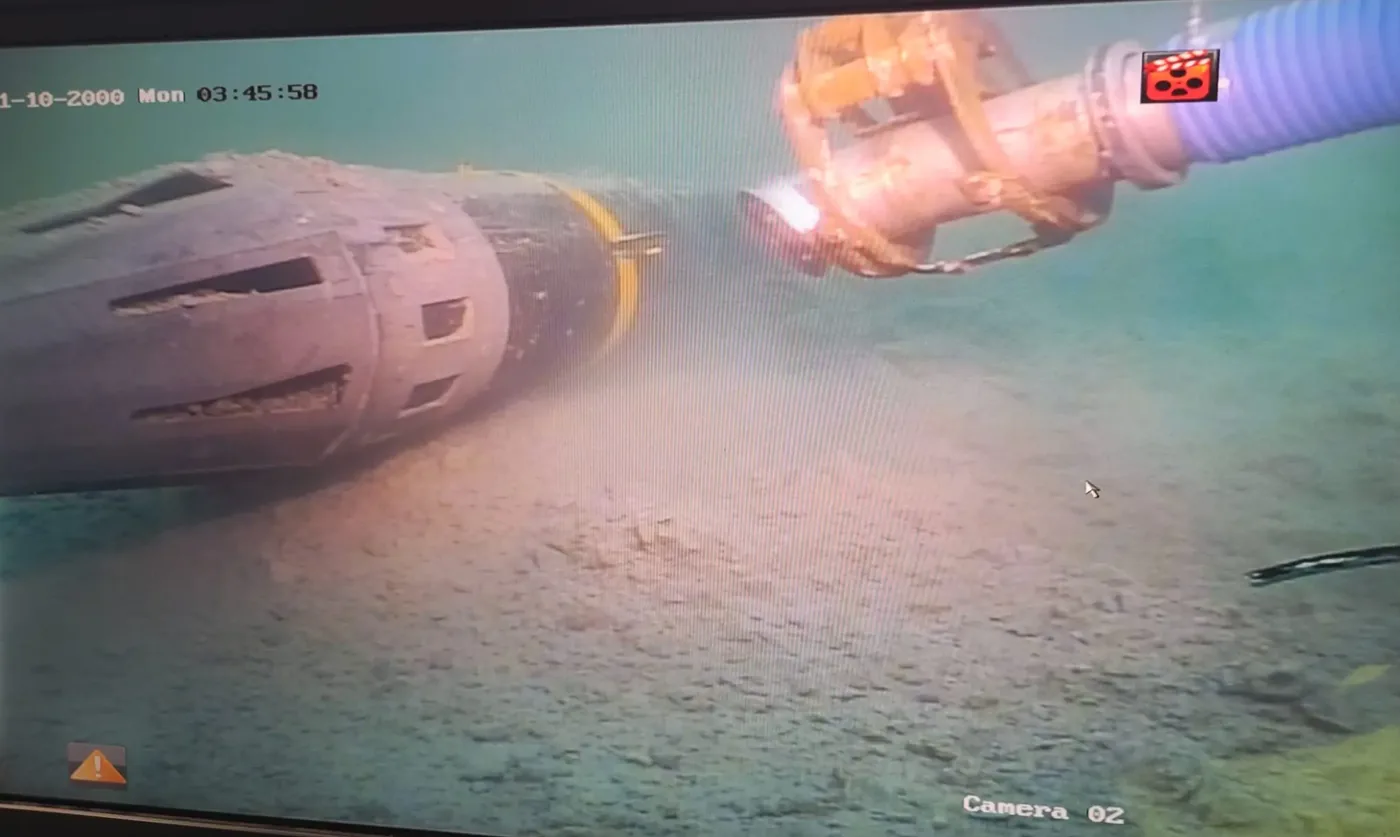
At Dounreay the Scout ran suction dredging equipment, driven and monitored from the support vessel. Excavation was guided by high definition video and sonar returns, with the operator working to what the screen showed rather than to a plan drawn in advance. Sediment does not sit where drawings say it will, and the value of a live feed is that you can respond to what is in front of you.
The vessel itself was a four-point moored multicat, which is a deliberately modest spread for work of this kind. Holding position on four points rather than running a dynamically positioned vessel changes the economics of a job substantially, and it is only possible if the subsea platform can be trusted to do the fine work itself.
What the deployment settled
Three things came out of it that we could not have established on a test bed.
The first is that the Scout holds station well enough to excavate accurately while a suction system is running. The second is that an operator can work productively from camera and sonar alone on this class of task, without a diver in the water to interpret conditions. Divers were engaged elsewhere in the wider marine operation, but this scope did not need them, and that was a decision taken on the evidence rather than on optimism.
The third is more about us than the machine. Tooling integration, deployment sequence and the handling arrangements on deck all behaved as intended, which means the design assumptions we made about interfaces were sound. When something in that chain is wrong, you find out on the first lift.
Where it goes next
Sediment clearance is one application. The same combination of a tracked chassis, a stable working platform and interchangeable tooling points at trenching support, installation assistance, inspection with intervention capability held in reserve, and maintenance tasks on nearshore infrastructure.
Offshore wind and marine renewables both keep asking the same question: how do you reduce the number of people in the water without losing the judgement a person in the water provides. Live sensing, a capable platform and an operator who can see clearly is one credible answer, and Dounreay is a data point in favour of it.
That is how development is meant to work here. A system is designed, proven against specification, then given real work to do, and what comes back from the seabed feeds the next iteration. The Raptor Scout page sets out the platform in detail, and our development pathway explains how a concept reaches the point of being trusted on a live project.
Working on something similar?
Tell us the problem and we will tell you honestly whether we can help.